
Minnesota: Medicaid, Medicare, and What to Know for 2027
Federal changes to Medicaid (called Medical Assistance (MA)) in Minnesota begin in October 2026, with major eligibility changes effective January 1, 2027. See the Minnesota DHS overview of federal Medicaid changes and Public Law 119-21.
Beginning January 1, 2027, certain adults ages 21–64 generally will need to renew MA every six months and may need to satisfy work or community-engagement requirements. These rules generally do not apply to people age 65 or older, people qualifying through disability, pregnant people, or parents living with children under 19.
For an aging parent, the practical answer still depends on the basis for eligibility, age, health, income, assets, marital status, and care needs. Most older adults are outside the new work-rule population, but other MA rules remain important.
Medicaid Planning Is Ongoing
MA eligibility and long-term-care rules are complex and can change. Good planning is not only about qualifying it is about preserving lawful options before a crisis.
Which income and assets count
Whether nursing-home or home-based care may be covered
How a spouse, home, and savings may be treated
Which transfers or ownership changes could cause penalties
What can be done before urgent care is needed
Early planning can reduce rushed decisions and avoid preventable eligibility problems. Minnesota DHS provides separate guidance for long-term services and supports and nursing-home coverage.
What About the House and Savings?
Asset limits do not automatically mean a parent must lose everything. MA uses different income and asset rules for different eligibility groups, and a home or vehicle may be excluded in some circumstances. Review the Minnesota DHS income and asset limits before transferring property, making gifts, changing ownership, or creating a trust.
If Your Family Needs Guidance
You do not have to master Medicaid, estate planning, and elder law while managing a family health crisis. An estate planning firm can help you evaluate appropriate options and protect your loved one’s assets, choices, and dignity.
Medicare Changes in Minnesota and the Medicaid Overlap
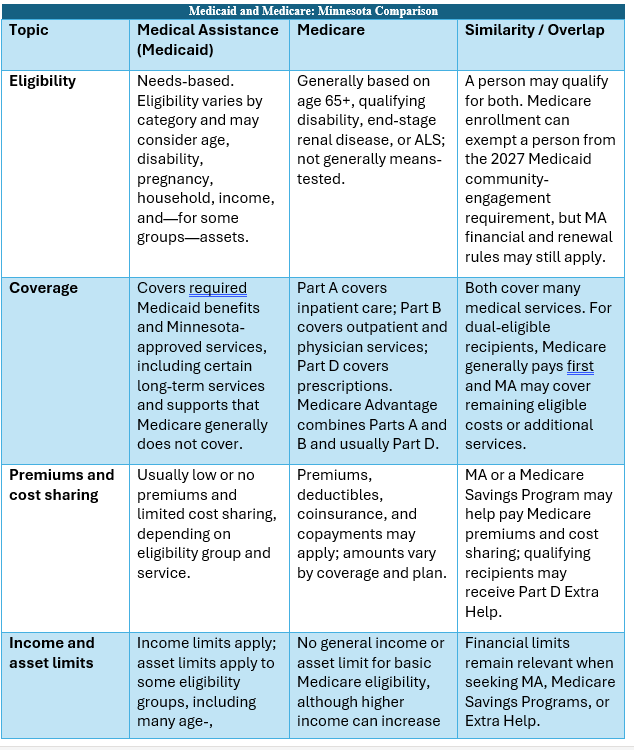
Medicare rules are federal, so the principal 2027 changes apply in Minnesota as they do nationwide. The CMS 2027 Medicare Advantage and Part D final rule changes plan quality ratings, simplifies certain enrollment processes, and strengthens protections when providers leave a Medicare Advantage network. Plan premiums, formularies, networks, and supplemental benefits will still vary by Minnesota plan and should be reviewed during annual enrollment.
Key changes: Star Ratings will emphasize clinical outcomes, access, and patient experience; enrollees gain stronger protections when significant providers leave a Medicare Advantage network; certain enrollment processes are simplified; and Part D cost protections continue, although formularies and pharmacy networks may change annually. For more information, go to Minnesota Aging Pathways.
Overlap With Minnesota Medical Assistance
A person may have both Medicare and Medical Assistance (MA). Medicare generally pays first; MA may help with premiums and cost sharing and may cover services Medicare does not, including some long-term services and supports. Minnesota’s Medicare Savings Programs may pay Part A or Part B premiums and, depending on the program, other Medicare cost sharing; certain programs also provide automatic Part D Extra Help. See Medicare’s Medicaid coordination guidance.
The 2027 Medicaid community-engagement requirement does not apply to people enrolled in Medicare, but MA renewals, financial eligibility, and long-term-care rules may still apply. Minnesota may coordinate benefits through Minnesota Senior Health Options or other arrangements described in the state’s dual-eligible overview.
What Families Should Review
· Identify whether coverage is Medicare only, a Medicare Savings Program, or full MA.
· Review annual plan changes to premiums, drugs, pharmacies, providers, and benefits.
· Keep MA renewals separate from Medicare notices.
· Before switching plans, confirm coordination of prescriptions, providers, long-term care, and cost sharing.
Because 2027 plan details can change by county and carrier, beneficiaries should compare options through Medicare Plan Compare and confirm MA status with Minnesota DHS before making coverage changes. And, as always, reach out to our TruLync team — we’re here to help.